

International SOS warns of converging risks in 2027
Mon, 23rd Nov 2026 (Today)
International SOS has published its Risk Outlook 2027 report, warning that converging threats are putting more pressure on workforce protection and business resilience.
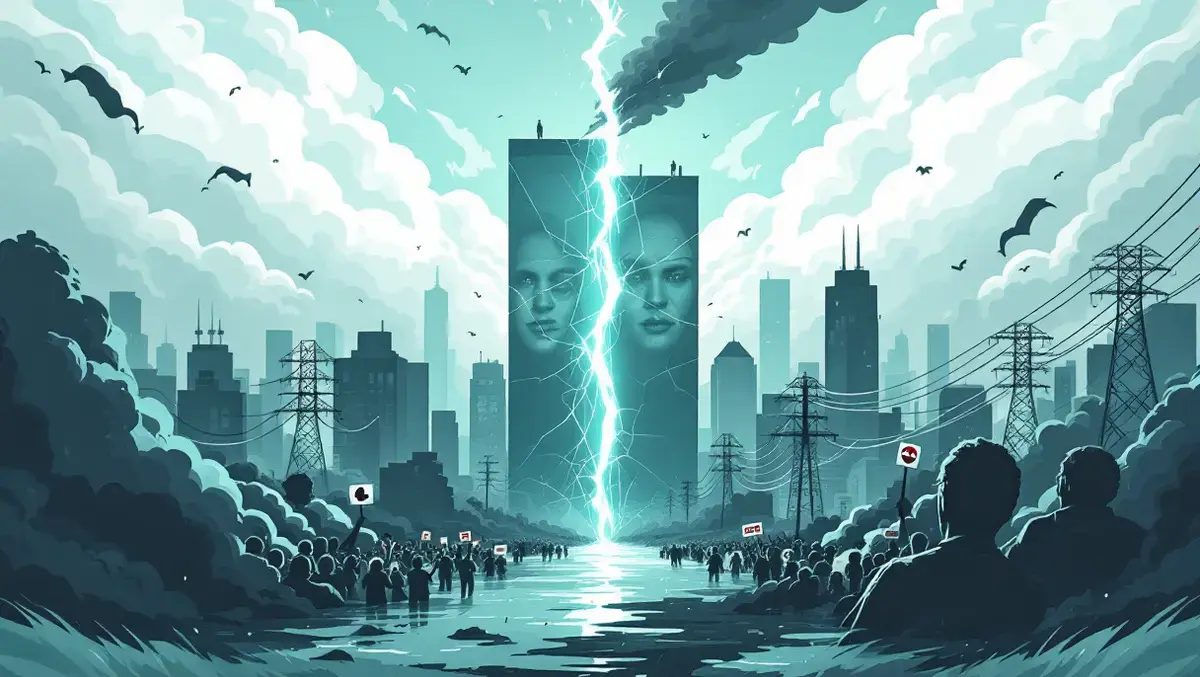
The study identifies geopolitical tensions, cyber threats, extreme weather, AI-enabled misinformation and workforce health issues as the main risks shaping the operating environment for companies. It argues that businesses can no longer treat these pressures as separate problems, because they can combine to affect employee safety, supply chains, travel and continuity planning.
For Indian companies, the findings come as more businesses expand overseas and manage wider supply chains and dispersed workforces. This makes risk management a boardroom issue, as leaders assess how international instability, climate disruption and digital threats could affect operations at home and abroad.
Conflicts involving Russia and Ukraine, along with tensions in the Middle East, are influencing trade, security and workforce mobility, the report says. It points to a more fragmented geopolitical environment that could leave companies facing sudden changes in travel conditions, logistics and market access.
Climate pressures
The report also places greater emphasis on weather-related disruption. Rising temperatures, flooding, air pollution, wildfire smoke and outbreaks of climate-sensitive diseases are all cited as factors that could increasingly affect employee health and productivity.
In India, these risks are especially relevant for employers managing staff in cities exposed to heatwaves, poor air quality and urban flooding. Businesses need to account for these conditions in travel policies, workplace safety measures and continuity plans, it says.
Health concerns extend beyond climate. Mental health issues, fatigue, chronic disease, changing workforce demographics and heavier workloads are described as additional pressures that can affect resilience across an organisation.
"While the specific risks facing organizations, sectors and geographies will vary, the defining characteristic of the risk landscape in 2027 is convergence. As risks become more interconnected, leaders are being challenged to anticipate the shape, extent and evolution of the interaction. In this environment, resilience is a key differentiator. Preparedness, informed decision-making and the ability to adapt quickly are increasingly critical to protecting people, maintaining business continuity and achieving long-term success. The organizations best positioned to navigate uncertainty in 2027 will be those that take an integrated approach to risk, recognizing that protecting their workforce and strengthening organizational resilience are fundamentally connected," said Arnaud Vaissié, Co-Founder, Chairman and Chief Executive Officer at International SOS.
Digital risks
Artificial intelligence features prominently in the report's assessment of the threat landscape. It says AI is complicating cybersecurity and crisis management, because the same tools that can improve monitoring and response can also be used by hostile actors to spread misinformation, create deepfakes and undermine trust.
State-linked cyber activity remains a concern for organisations and critical infrastructure, according to the report. It adds that companies need stronger cyber controls, clearer verification processes and better employee awareness to reduce the risk of manipulated content and digital fraud.
Chris Shaw, Senior Manager, Global Travel Security and Security Risk Intelligence at Philip Morris International, described the overlap between environmental, geopolitical and technological risks. "Extreme weather, geopolitical complexity, and AI are three powerful forces reshaping the global risk landscape. AI is a force multiplier: it is strengthening the capabilities of security and intelligence teams while simultaneously enabling threat actors to operate with greater speed, scale, and sophistication. Extreme weather is increasingly difficult to anticipate and can demand rapid, complex responses. At the same time, growing geopolitical fragmentation is creating a more volatile operating environment, leaving few parts of the world untouched by risk. Organisations therefore need to become truly risk-sensing, combining the best of human judgement with advanced digital capabilities to anticipate emerging threat and response with speed, clarity, and resilience," said Shaw.
The report also highlights the operational impact of activism and protest movements. Rapidly mobilised demonstrations and wider social tensions can affect employee movement, business travel, access to infrastructure and the flow of goods through supply chains, it says.
This raises the need for stronger intelligence gathering, early-warning systems and contingency planning. For multinationals and Indian companies with cross-border exposure, these measures are presented as part of broader efforts to protect staff while limiting disruption.
Medical risk remains central to the outlook. Dr Pamela Hymel, MD, MPH, FACOEM, Chief Medical Officer at Disney Parks, Experiences and Products, said: "Infectious diseases and climate continue to be key issues, with significant impacts on operations globally. We are continuing to model how this affects our people, with a focus on aligning safety and health."
Ken Senser, former Chief Security Officer at Walmart and Partner and Chief Strategy Officer at Corporate Security Advisors, said: "Combined with increasing capability of adversaries, whether it's the foreign adversary or the individual with AI who's a fraudster, we're going to start seeing things we've never seen before."